Ruhm und öffentliche Aufmerksamkeit
Cinder & EllaFame and public attention in Cinder and Ella are not a stable reward but a volatile system of exposure: publicity can be manufactured, private lives made into entertainment, and a person’s reputation reversed by the same audience that helped create it. Brian Oliver’s celebrity first magnifies Ella’s blog, then helps make her a target of online hatred, and finally turns her recovery into a national story. The book’s repeated reversals show how attention can confer recognition while stripping its subjects of control over their own narratives.
Publicity as a Managed Performance
The machinery of celebrity is visible early in Brian’s story, when his representatives consider turning his romantic life into a promotional instrument. Lisa argues that a public engagement could help sell the film and demonstrate that Brian has matured; Joseph calls the idea a ready-made love story capable of pleasing teenage fans and strengthening Brian’s image. Brian objects, and when the team presses for a genuine romance with Kaylee Summers, he doubts he can convincingly perform one. The proposal exposes the tension at the heart of celebrity publicity: the performance is supposed to look like private feeling, while its intended return is commercial attention.
That tension follows Brian into the public-facing relationship with Kaylee. Their supposed date at the Ivy is staged in a location known for celebrity sightings, where photographers recognize Brian’s car before it reaches the restaurant. He remembers that Kaylee had treated their earlier casual encounter as the beginning of something more, while he had tried to make clear that he did not want a relationship. When he later proposes an amicable separation, Kaylee counters that the public already believes they are together and that their careers depend on the plan. In her view, celebrity is a contest for popularity; in his, the arrangement can be ended without making the fiction real. The disagreement makes visible who is expected to bear the cost when a publicity script outlives the private consent behind it.
Networked Attention and Ella’s Blog
The book also shows attention moving through networks rather than only through formal publicity campaigns. After Ella sends Brian a humorous, personal review of The Long Road Home, he urges her to resume blogging. She eventually posts the review as an apology to him and explains that an accident had interrupted her blog. Brian responds in the comments, and their argument about Princess Ratana’s costume draws other readers into the exchange. His celebrity gives the post an audience beyond Ella’s existing readership, but the debate remains recognizably hers: a film criticism, written in her characteristic voice, becomes a meeting point between an anonymous blogger and a famous actor.
Brian’s birthday message makes that increased visibility unmistakable. On his Facebook page he calls Ella his favorite blogger and greatest supporter, links to her review, and shares multiple posts from “Ellamaras Worte der Weisheit.” Vivian shows Ella the posts on her phone, and Ella discovers that her Twitter following has jumped from just over six thousand to more than twenty-five thousand in a day. Rob immediately connects the sudden growth to Brian’s ability to direct Hollywood’s attention toward her and asks whether her personal information is protected. Ella has kept separate blog-related accounts and an email address, a practical boundary that matters because a much larger audience does not mean that the audience knows her private identity.
The episode establishes a double effect: the celebrity endorsement brings Ella’s writing back into public circulation and makes her visible to new readers, yet the attention is mediated by Brian’s fame. Her words gain reach because a famous person points to them. The book later turns this welcome amplification inside out, as the same networked publicity enables hostile readers to seize on a story about her and convert visibility into a threat.
Scandal, Harassment, and Withdrawal
After the restaurant encounter and the false account spread by Brian’s team, Ella’s private identity remains undisclosed, but her identity as a blogger is exposed to an angry online public. Her inbox fills with hate mail; her blog and social accounts are covered with cruel comments. At school, the story also changes how classmates interpret her: they call her a liar and a stalker, despite her never having claimed publicly that she knew Brian. Rob, Vivian, and Juliette accompany her across the school parking lot and confront people who approach, but their support cannot prevent the laughter and insults. Public attention follows Ella out of the digital sphere and alters the conditions of her ordinary daily life.
Brian later learns that Ella’s public-facing accounts have been deleted, her email account closed, and her blog comments disabled. The blog itself remains online, preserving three years of writing, but she has not posted since Saturday. He understands that the rumors came from his own representatives and that the messages have made it impossible for him to contact her: she has also removed the routes by which they used to communicate. The distinction between public anonymity and online exposure is crucial. The public has not discovered Ella’s legal identity, yet it has reached the part of her life she had built under a separate name and driven her to withdraw from it.
When Brian finally addresses the story, he tells Candice that the supposed charity project was invented, that Ella was not a fan, and that he was no longer engaged to Kaylee when he kissed her. He says his management team devised the account with Kaylee in a meeting he did not attend and released it without his knowledge or consent, despite his assistant’s objection. The correction identifies the origin of the false narrative, but it does not instantly undo its consequences. On television, Brian describes the scale of the harm: Ella has been ridiculed, targeted by hate sites, and sent death threats. He also says that her blog mattered to her and that, since the statement was issued, she has disappeared from the online life she once maintained, changing her phone number, email, and chat name as well as deleting Facebook and Twitter. The celebrity apparatus that manufactured a story has left Ella with the burden of making herself unreachable.
The Public Rewrites the Story
Brian’s television interview marks another turn in the circulation of attention. He admits that he misses Ella and explains how the false story, the harassment, and her disappearance have affected her. He then says he needs a companion for the premiere of The Druid Prince and wants Ella to come: the film is their story, and it is what brought them together. Even if she refuses, he announces that he will go out with anyone who can tell him how to reach her. He identifies a gift Ella left at the café, alongside his gloves, as a way to distinguish someone with genuine knowledge from the multitude who might claim to know her. His appeal is both a personal attempt at reconnection and a public invitation that once more places their private history before an audience.
As the premiere approaches, Ella follows the news and learns that Los Angeles is speculating about whether Prince Cinder’s Ella will appear. Brian’s interview has recast their history as a modern fairy tale, and the public has reversed its judgment: the woman who had been treated as America’s most hated figure is now celebrated as a clever, funny, beautiful, strong survivor. The turnaround is as revealing as the earlier hostility. The crowd’s approval does not arise from the disappearance of celebrity culture but from a new story within it, one that makes Ella’s appearance the event everyone is waiting to witness.
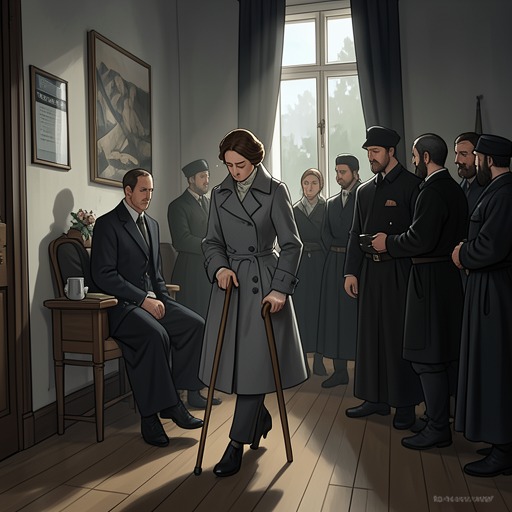
That anticipation carries a coercive edge. Ella recognizes that Brian’s appeal may ensure he gets what he wants: if she does not show up, the country may turn against her again. Outside the Westwood theater, the crowd is so large that police have closed the street for two blocks. When Ella finally appears, the walk to the doors feels impossibly long; cold weather makes her joints stiffen and her limp more noticeable. The people nearest her begin to whisper, then recognize her, and the murmur becomes a roar travelling along the block. Fans reach toward her, cameras flash in her face, and the noise overwhelms her until a suited security guard catches her as she stumbles backward from the ropes. He assures her that the crowd cannot cross them and that she is safe on her side. The ropes give physical shape to the book’s central contradiction: the audience can acclaim Ella and still press against the boundary of her personhood.
Reversal, Visibility, and Control
Across these episodes, public attention repeatedly changes value according to who directs it and what story accompanies it. Brian’s endorsement helps restore Ella’s blogging and multiply her followers; a false publicity account turns that visibility into abuse; his public correction and appeal recast her as a heroine whose arrival the crowd treats as a national occasion. Neither the positive attention nor the hostile attention is simply private. Both circulate through posts, celebrity pages, television, news coverage, and the spectators gathered outside the theater.
The pattern also links celebrity image to the commercial logic of romance. Brian’s team initially treats engagement and dating as tools for a film campaign, while later Brian uses a televised appeal to explain what the relationship means to him and to seek contact with Ella. The difference is not that one act is public and the other private: both depend on a mass audience. The difference lies in the story being told, the degree of consent involved, and the risks transferred to Ella. The same public that once called her a stalker now waits to welcome her, while she understands that its affection may be as conditional as its contempt.
Fame therefore functions as both amplifier and constraint. It makes Ella’s words travel farther than her own audience could, but it also exposes her to narratives she did not write and pressures her to become a character in a story shaped by Brian, his representatives, and the media. Her emergence at the premiere does not erase the earlier damage or prove that public approval is secure. Instead, the scene ends with attention made tangible: a crowd, a blocked street, reaching hands, camera flashes, ropes, and a guard. Ella has returned to public view, but the boundary that keeps her safe remains necessary.